Technology that gets you moving
Pneumatic Conveying Guide

A Practical Guide to Pneumatic Conveying Systems for Bulk Material Handling
Pneumatic conveying systems move dry bulk materials, such as powders, pellets, and granules, through sealed pipelines using pressurized air or vacuum. They are a clean, efficient, and space-saving alternative to mechanical conveyors, and they handle materials that screws, belts, and bucket elevators tend to struggle with. This guide explains how pneumatic conveying works, the components involved, the trade-offs between system types, and the design decisions that separate a reliable installation from one that creates recurring problems. It is written for plant engineers, operations managers, and process teams who are evaluating a new system or troubleshooting an existing one.
Typical Applications
A typical pneumatic conveying system at US Systems moves materials such as polymers, lime, soda ash, plastic pellets, and dry milk from a railcar or truck to a silo, or back the other way, through sealed pipes. Additional applications include intermodal and transloading operations, in-plant transfers, dust control, and portable solutions for mobile or temporary needs.
System Components
A pneumatic conveyor is not a single component. It is an assembly of equipment working together. The essential parts of a pneumatic conveying system are:
- Positive Displacement Blower: Generates the pressure or vacuum that moves the material. Blower selection depends on system type, material characteristics, and conveying distance.
- Feed System: Introduces material into the conveying line. Common options include flap valves, butterfly valves, and rotary valves, selected based on the material’s properties and the application.
- Conveying Line: Typically metal pipe that transports material from source to destination. Line design accounts for material type, conveying velocity, and pressure drop.
- Elbows and Bends: Direction changes in the line. Engineered elbows reduce wear and pressure drop, which matters more than most people realize for abrasive or friable materials.
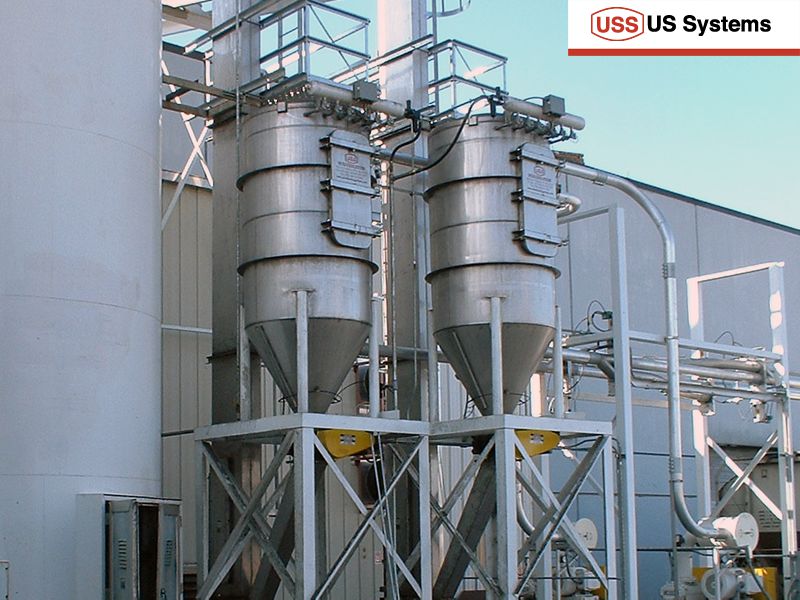
- Air Filtration System: Removes remaining dust or particles from the exhaust air before release or recirculation. Often a reverse-pulse jet design for online cleaning of filter cartridges or bags.
Operation Phases
- Material Entry: The feed system meters material into the conveying line.
- Conveying: The airstream generated by the blower moves the material through the pipeline. Material can travel in dilute phase (low material-to-air ratio) or dense phase (high material-to-air ratio) depending on the system design.
- Material Separation: At the destination, a filter receiver or cyclone separator drops the material out of the airstream.
- Exhaust Filtration: Any remaining fines are filtered out before the air is vented or recirculated to the atmosphere.
Typical Industries
- Food Industry: Moves flour, grain, milk powder, seeds, sugar, and coffee while maintaining hygiene and preventing contamination.
- Pharmaceutical Industry: Essential for transporting fine powders and granules in a clean, controlled environment.
- Chemical Industry: Conveys chemicals like lime, soda ash, cement, alumina, talc, and silica with minimal risk of contamination.
- Mining and Minerals: Well-suited for raw materials and finished products, including ores and minerals.
- Cement and Construction: Moves cement, fly ash, and other construction materials efficiently at high throughput.
- Agriculture: Transports grains, feed, seeds, and other agricultural products.
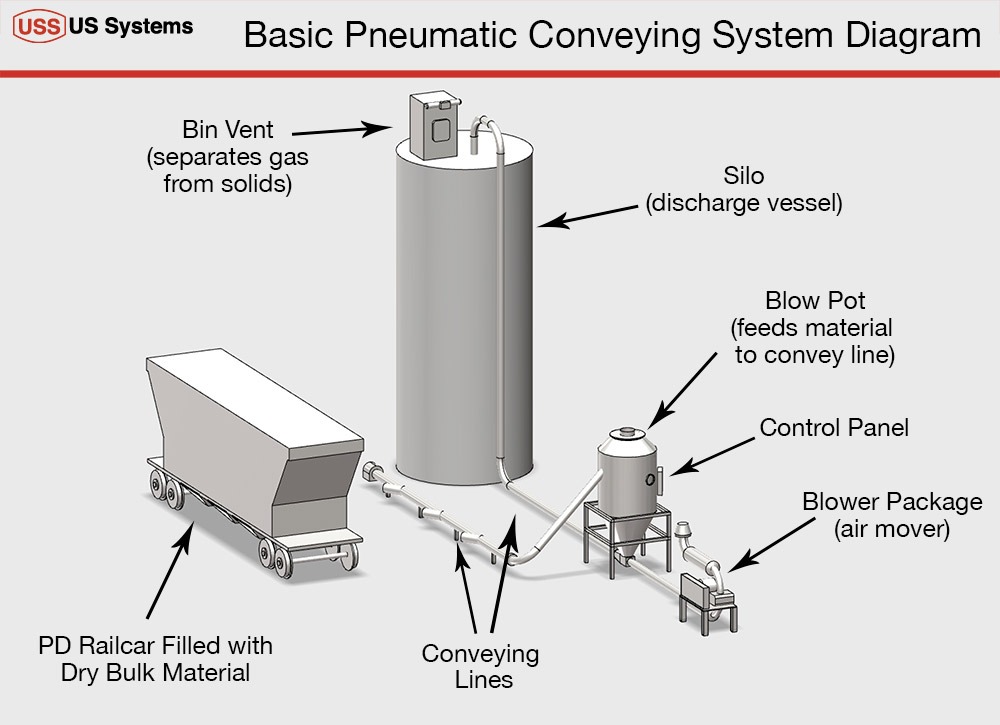
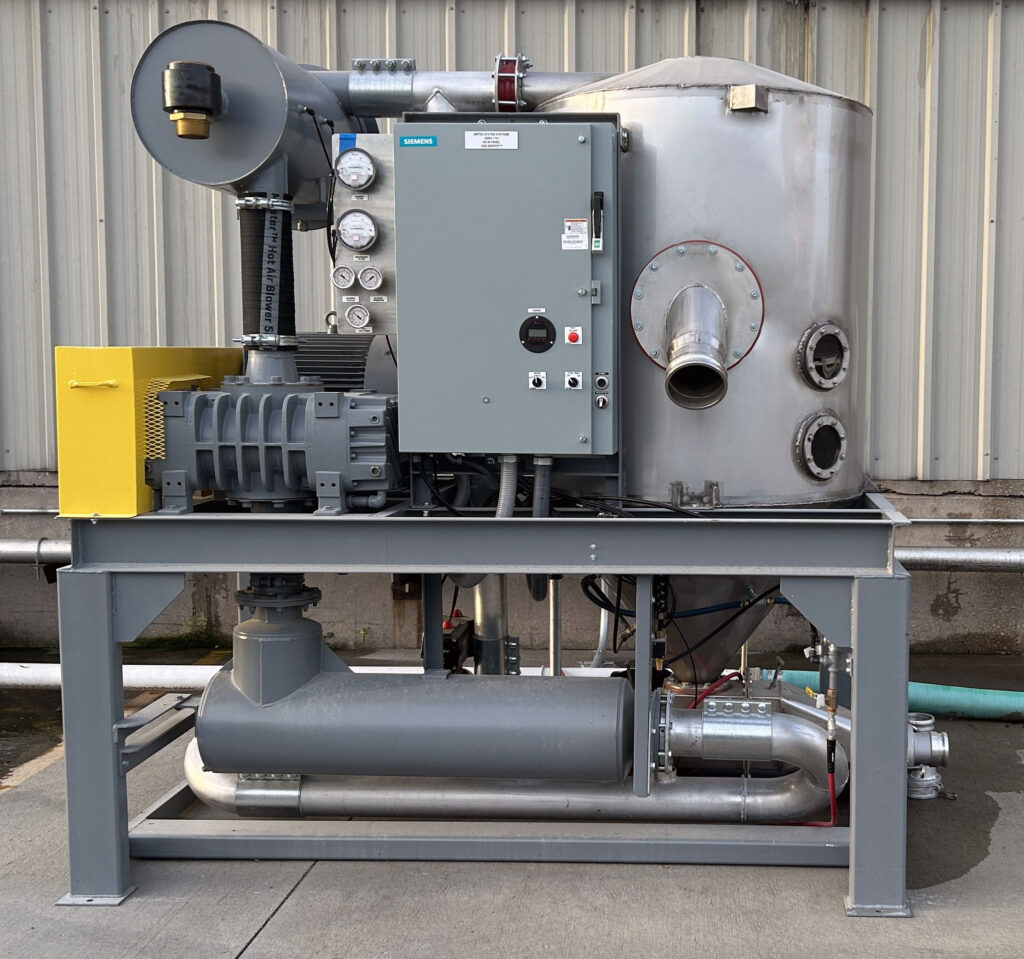
This diagram shows the basic components of a pneumatic conveying system. In this particular configuration the operator connects the intake convey lines to the PD railcar, runs a safety check, and starts the system.
- The blower motor starts and then turns the shaft of the blower via belts or direct drive. The blower intakes filtered air, compresses it, and pushes it through the line.
- The pot uses a USS Venturi or DirectAir Valve to induce a vacuum, drawing material out of the railcar into the pot. Some systems use two blowers (one for pressure, one for vacuum) instead of a blower and a venturi.
- Either by sensor automation or manual control, the system switches from vacuum to pressure mode, and the material is blown through sealed convey lines into the silo, where a filter separates the air from the material.
- The cycle repeats at a high rate until the railcar is empty.
Advanced Controls
The control panel is the brains of the system. It starts the blower, receives sensor data, and sequences equipment operations to hit optimal rates. Most systems are powered by electricity, but we also build pneumatic logic controls for environments where electricity is unavailable or undesirable. For more complex installations, programmable logic controllers (PLCs) handle the work.
Our automation engineers tune each control system to offer full command over every stage of the pneumatic conveying process, which supports efficient, reliable, and easy-to-operate systems.
Pneumatic conveying is an efficient method for transporting bulk materials through pipelines using air. Its flexibility, cleanliness, and range of compatible materials make it a strong fit for many industries. The design and operation of any system must be tailored to the specific material and application to ensure reliable performance.
To learn how our pneumatic conveying solutions can improve your material handling processes, contact us to discuss a customized system for your operation.


Why Pneumatic Conveying Is a Superior Solution
Pneumatic conveying offers a simple, effective solution to many traditional conveying problems. It is a practical alternative to mechanical conveyors, which often rely on hard-to-maintain moving parts such as belts, screws, rollers, vibrating plates, elevator buckets, drag chains, cables, and discs.
Benefits of Pneumatic Conveying
- Flexible Layouts: Pneumatic conveying systems adapt to fit around obstacles and existing plant equipment, allowing a more efficient, customizable design compared to rigid mechanical systems.
- Long Distances: These systems transport materials over long distances without significant loss or degradation, a real advantage in large industrial settings.
- Cleanliness and Hygiene: The enclosed nature of pneumatic conveying prevents contamination and dust exposure, which is critical in food processing, pharmaceutical, and chemical applications.
- Reduced Material Degradation: A well-designed system treats material gently, minimizing damage to fragile items and preserving product quality during transport.
- Consistent, Controllable Flow: Pneumatic systems offer steady material flow that integrates easily with automation, improving process efficiency and reducing manual intervention.
- Improved Safety: The enclosed design reduces dust explosion risk in plants handling combustible powders, and automated transport reduces manual handling injuries.
- Space-Saving: Pipe takes up less floor space than a belt or screw conveyor of equivalent capacity, which matters in older or crowded facilities.
- Versatile Materials: These systems handle powders, granules, pellets, and some semi-fluid materials, making them valuable across many industries.
- Energy Efficiency: When designed correctly for the specific application, pneumatic systems run energy-efficiently and cost-effectively over the long term.
- Low Maintenance: Fewer moving parts mean reduced maintenance requirements and less downtime compared to mechanical conveyors.
- Strong with Fine Materials: Pneumatic conveyors excel at transporting small and fine materials including plastic pellets, polymers, lime, soda ash, cement, alumina, talc, and silica, which can clog or grind in mechanical systems.
- Ideal for Food Products: Items like flour, grain, milk powder, seeds, and sugar arrive intact and uncontaminated, unlike in mechanical systems where they can be ground down or trapped between components.
- Contamination Control: The fully enclosed system prevents material from being scattered, spilled, or dispersed outside the conveying path, ensuring clean and efficient transport.
By suspending particles in air and moving them through a sealed system, pneumatic conveying solves many of the challenges faced by traditional mechanical conveyors, making it a reliable choice for a wide range of applications.
One Size Does Not Fit All: The Benefits of Customized Solutions
At US Systems, our motto, “Total System Responsibility,” reflects our commitment to understanding your needs and designing customized solutions that address your specific challenges.
The Pitfalls of Pre-Fab Systems
Pre-fabricated systems pushed into custom applications often create problems that do not appear until months after installation, resulting in costly fixes that a careful evaluation up front would have prevented.
The Value of Custom Solutions
Opting for a custom solution does not necessarily mean higher costs. A system built around your actual material, distances, and operating conditions usually runs more efficiently and creates fewer problems. Pneumatic conveying should solve problems, not create new ones.
Our Commitment to You
At US Systems, we carefully analyze your specific material handling needs. Our team designs customized solutions that save you time, effort, and money while providing a hassle-free experience. Our custom solutions are competitively priced against pre-fabricated options.
For efficient, reliable, and cost-effective pneumatic conveying systems, trust US Systems to deliver solutions that fit your specific requirements.


Understanding Rotary “Airlock” Valves: Pros, Cons, and Alternatives
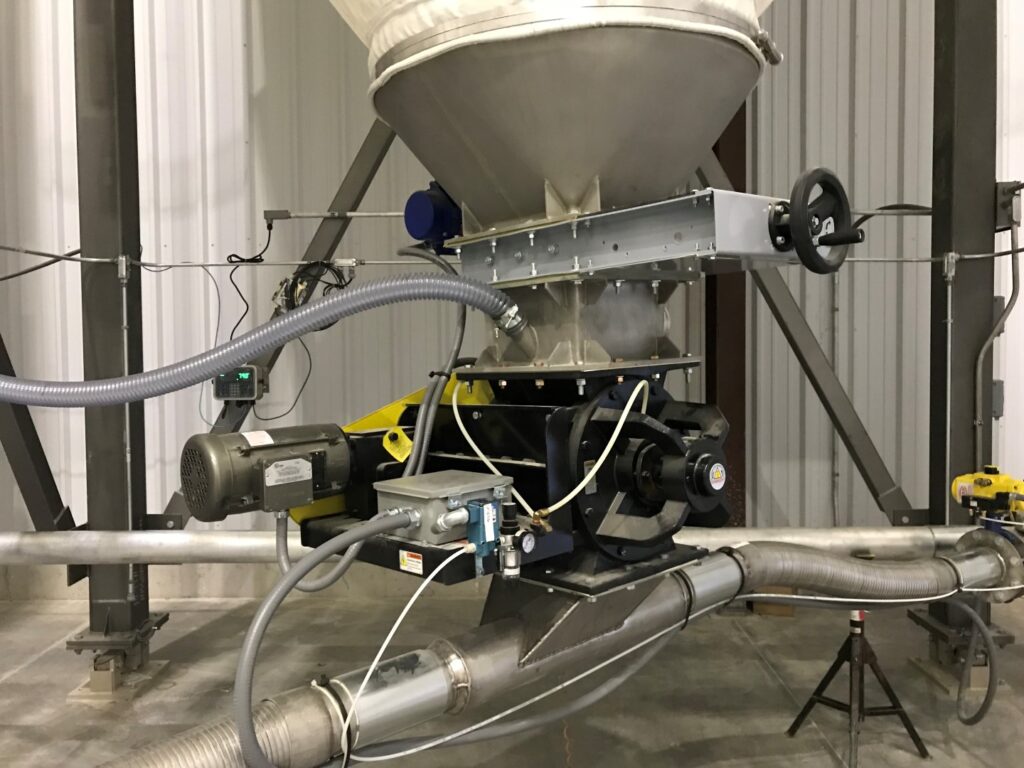
Rotary airlock valves are often the right component for feeding material in many applications, but not every one. They play a critical role in metering material and separating pressure and vacuum zones, yet they come with inherent issues and require regular maintenance.
The Imperfect Airlock
Rotary valves are frequently used as airlock valves, but they do not seal air perfectly between pressure and vacuum zones. This imperfection produces blowby air, which flows across the pressure differential and causes pressure loss, operational issues, and unplanned downtime.
Challenges with Blowby Air
Blowby air can cause material bridging in the bin above, resulting in no-flow conditions. Over time, as the vanes wear from material entrainment, air leakage through blade tip clearances increases. High-velocity flows can then entrain fine particles, causing severe erosive wear. Eventually, excessive pressure drops can cause system plugs.
Maintenance and Longevity Issues
Rotary airlock valves wear over time. Many plants install two so one can run while the other is rebuilt. Sales and repairs of rotary valves are a significant revenue line for many large pneumatic conveying companies, which is worth knowing when you are specifying a system.
Alternative Solutions
At US Systems, we often engineer solutions that eliminate the need for a rotary valve. By understanding the specific needs of each customer, we can recommend simpler, more cost-effective alternatives, such as our cycling loader or cycling “Pot” system. These systems are automatic and achieve high rates without the complications and costs of an airlock. In many applications, simple passive flap valves or butterfly valves can do the job and deliver cost savings that pay off for years.
Benefits of Our Cycling Pneumatic Conveyor
Our cycling pneumatic conveyor addresses common issues associated with rotary airlock valves, including:
- Blowby air
- Worn shaft seals and packing
- Bent rotors
- Worn and chipped rotors
- Wasted horsepower and energy
- Worn-out housings
- Chain drive maintenance
- Inherent leaks
Expertise and Custom Solutions
It is essential to work with a pneumatic conveying company experienced in handling your specific material’s flow characteristics. US Systems considers the unique circumstances of each application and associated costs when utilizing or recommending alternatives to rotary valves. For the best performance and cost-efficiency, consider our innovative solutions designed to optimize your material handling processes.
How We Control Excessive Fines and Protect Friable Material
Excessive fines can occur in pneumatic conveying systems for several reasons. Pellets may stick to pipe walls, leaving strands known as angel hair that eventually break loose and contaminate the system. Material can also form a coating inside the pipe that peels off in sheets, called snakeskin. Pellets with small imperfections after cutting, such as a protruding ear, can shed fragments that become fines. These fines affect the melting process of pellets and lead to defects.
Causes and Mitigation Strategies
The causes of fines vary by application, but several strategies help mitigate them:
- Material Coating and Treatment: Specialty coatings applied to pipe interiors reduce pellet adhesion and suppress angel hair and snakeskin formation.
- Optimized Cutting Techniques: Better pellet cutting upstream reduces the imperfections that later break off as fines.
- Flow Rate Management: Controlling conveying velocity reduces friction and adhesion.
- Proper System Design: A system designed around the specific material characteristics produces fewer fines in operation.
- Regular Maintenance: A routine maintenance schedule catches issues before they generate significant fines.
It is critical to work with a pneumatic conveying company experienced in these specific problems. US Systems brings extensive expertise in designing and maintaining systems that address the causes of excessive fines for efficient, defect-free material handling.
Ensuring Reliable Material Conveying: Our Expertise and Solutions
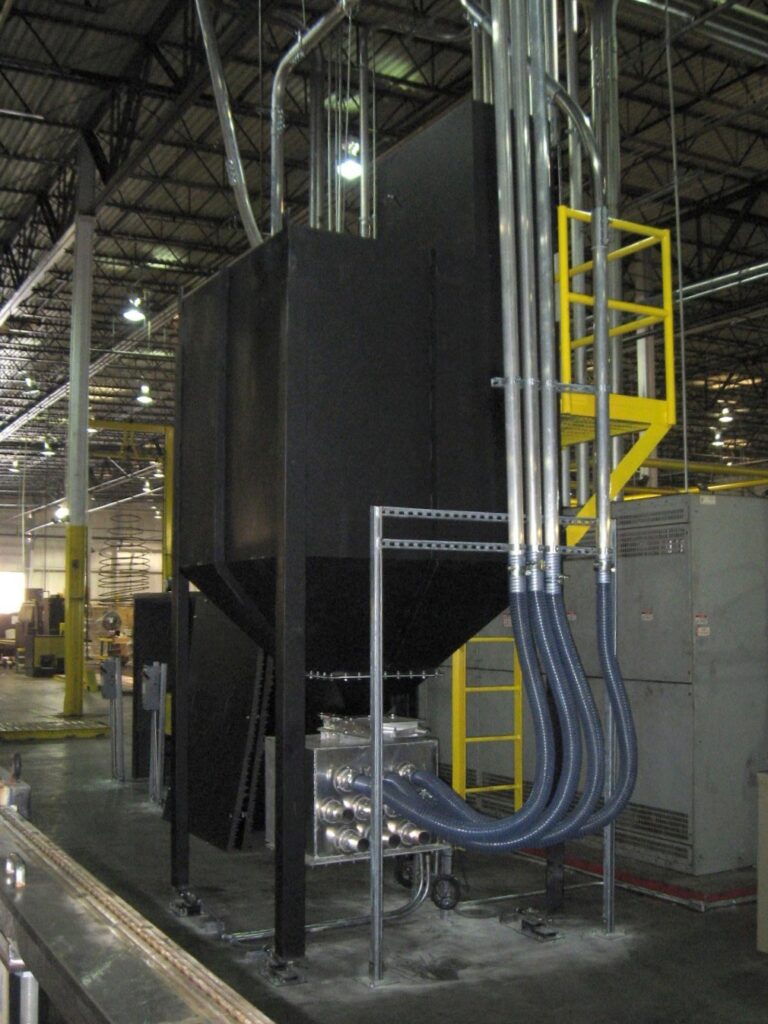
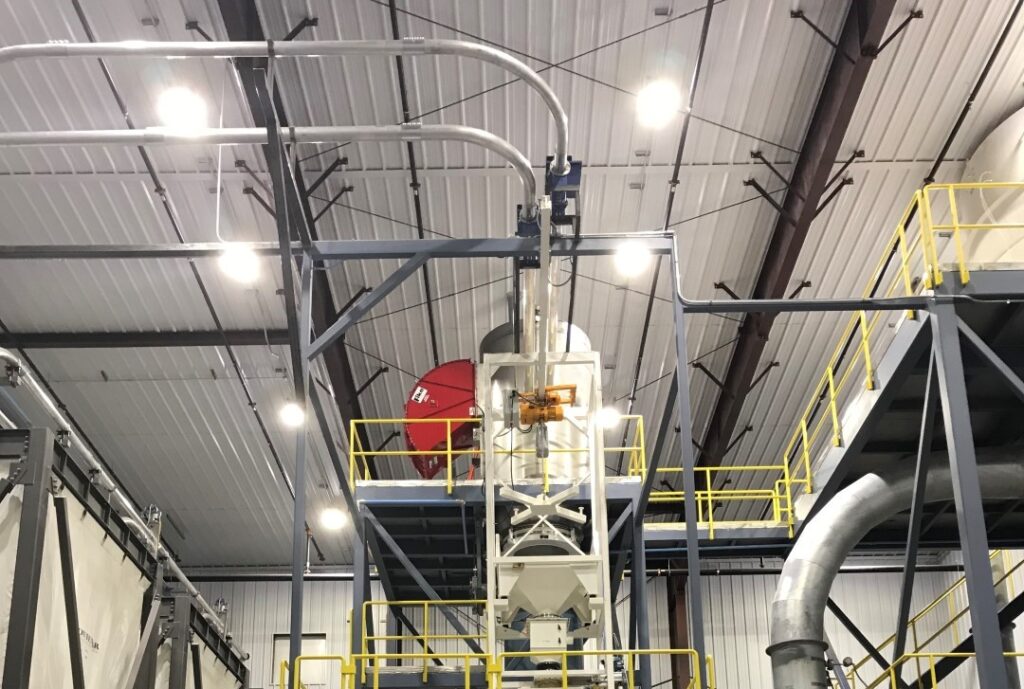
At US Systems, we leverage decades of experience to address and prevent common challenges in material conveying. Typical issues and our mitigation strategies include:
Preventing De-Mixing of Mixtures
When one ingredient absorbs moisture from the air and sticks to the pipe wall, the rest of the mixture arrives out of ratio. Our systems are designed to manage moisture and maintain even flow, preventing de-mixing.
Managing Powdery Mixtures
A dry, powdery mixture that pours readily out of a container can become a pasty mass in the conveying line as the air absorbs heat from the blower. We implement temperature control measures to maintain optimal conveying conditions.
Handling Abrasive Materials
An abrasive material that conveys cleanly can suddenly cause excessive wear if the source or pulverizing method changes. We use durable, wear-resistant materials and adaptable system designs to handle these variations. We also provide ceramic-backed elbows and other ceramic or polyurethane components that save customers time and money. With industrial controls experts on staff, we can use automated control systems to monitor and adjust flow rate in real time.
Protecting Friable Materials
Friable materials can degrade when air-conveyed through pipelines with many bends. Our engineering solutions include gentle conveying paths that minimize bends and reduce the risk of material degradation.
Pipeline Blockages (Plugging and Choking)
Pipeline blockages halt operations and create time-consuming maintenance. Proper line sizing is critical to ensure the pipe diameter matches the material being conveyed and the required flow rate. Flow aids such as air blasters or vibrators can also keep material moving and prevent clogs.
Dust Control
Dust generation and air quality are significant concerns in pneumatic conveying. Dust poses health risks and reduces air quality. A fully enclosed conveying path helps prevent dust from escaping. Dust collection and air filtration systems capture airborne particles to maintain a clean, safe environment.
Controlling Heat
In pneumatic conveying systems, the blower or compressor generates heat as a byproduct of pressurizing the air used for transporting materials (adiabatic compression). This heat can negatively affect some materials, especially those sensitive to temperature changes. Elevated temperatures can cause materials to degrade, become sticky, or change their physical properties, potentially leading to blockages, reduced product quality, and operational inefficiencies. Sugar, for example, is sensitive to high heat, so we often install an aftercooler on pressure systems. Positioned downstream of the blower, the aftercooler mitigates these effects by cooling the pressurized air before it enters the conveying line. The aftercooler uses a heat exchanger to transfer excess heat from the air to a cooling medium, such as water or ambient air, reducing the air temperature to an acceptable level. This ensures that conveyed materials remain stable and maintain their desired properties throughout transport, enhancing the reliability and efficiency of the system.
Only through careful design and engineering can the properties and characteristics of the material be preserved.
Understanding Material Characteristics in Pneumatic Conveying
Pneumatic conveying systems are highly versatile and can handle virtually all powder and granule materials. The characteristics of the material being conveyed, however, are critical to ensuring the system is tuned correctly for the application. Careful characterization up front enables high efficiency and delivers all the benefits associated with pneumatic conveying.
Key Material Characteristics:
- Specific Gravity: The weight of the material relative to its volume.
- Aerated or Loose Specific Weight: The weight of the material when aerated or in a loose state.
- Settled Specific Weight: The weight of the material when settled and compacted.
- Particle Size: Impacts flowability and conveying behavior.
- Abrasiveness: The potential of the material to cause wear on conveying equipment.
- Moisture Content: Affects flow and potential for clumping.
- Corrosiveness: The material’s potential to corrode the conveying system.
- Tackiness: The stickiness of the material, which affects flow and adhesion.
- Aeration and De-Aeration Characteristics: How readily the material takes up and releases air.
- Angle of Repose: The steepest angle at which the material remains stable without sliding.
- Toxicity: Potential health hazards associated with the material.
- Temperature Limitations: The acceptable handling temperature range.
- Crystal Structure and Form of Particles: The physical structure and form of the material particles.
- Odor Absorption: The material’s ability to absorb and retain odors.
Ideal Materials for Pneumatic Conveying:
The best materials for pneumatic conveying are typically:
- Free-flowing
- Non-abrasive
- Non-fibrous
By carefully considering these material characteristics, US Systems designs pneumatic conveying systems optimized for your specific needs, ensuring efficient, reliable, and cost-effective operation.


General Pneumatic Conveying System Types:
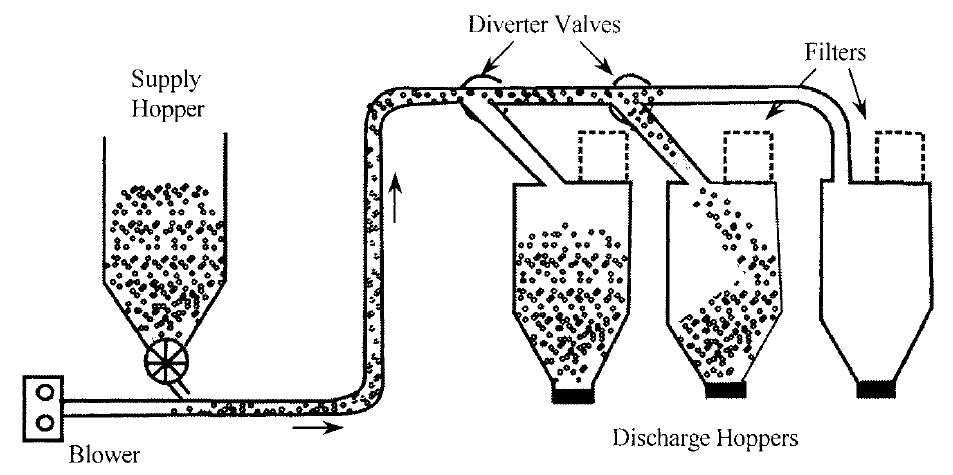
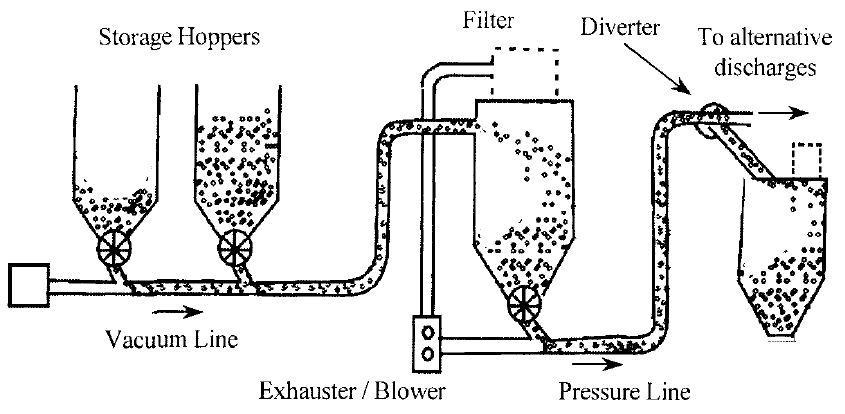
Positive Pressure
Blows material from a single source to one or multiple destinations. Typically offers higher efficiency than vacuum systems.
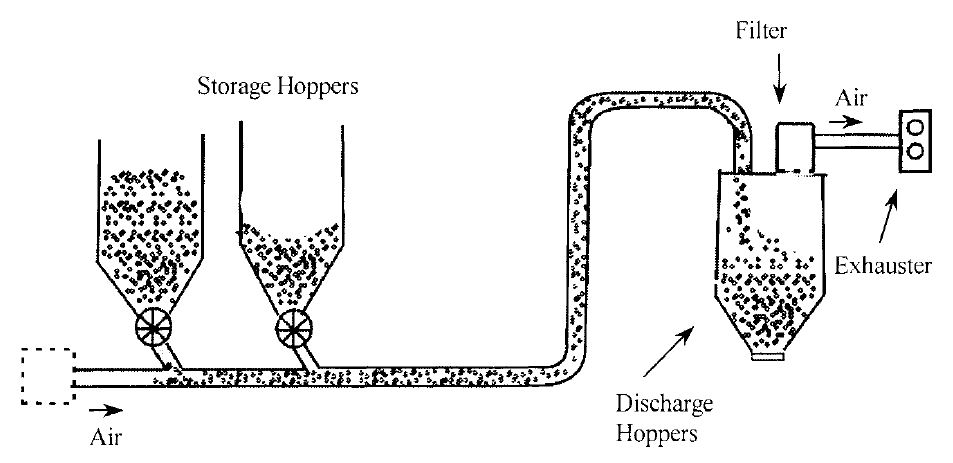
Negative Pressure
Pulls material from one or multiple sources to a destination. Adds no heat to the conveyed material. Allows for material pickup from a wand.
Combination Vacuum/Pressure Systems
Pulls and pushes material simultaneously. Often uses two blowers, one for vacuum and one for pressure. A rotary airlock valve separates the vacuum and pressure sides of the system.
Understanding Phases in Pneumatic Conveying Systems
Pneumatic conveying systems operate under different phases, each defined by how materials and air flow through the system. The key concepts:
Single-Phase Flow
Single-phase flow involves a single, homogeneous material moving through the system. In pneumatic conveying, this typically refers to air-only flow.
Multi-Phase Flow
Multi-phase flow occurs when more than one material flows through the system. In pneumatic conveying, this means air and the conveyed material move together. Multi-phase flow is characterized by the solids loading ratio, which is the air-to-material ratio. These are also known as flow regimes.
Flow Regimes: Dilute Phase vs. Dense Phase
Dilute Phase Systems
Dilute phase systems run with a higher air-to-material ratio. They typically operate at higher air velocities and lower pressures, with air moving fast enough to carry the material through the system to its destination. About 90% of pneumatic conveying applications fall under the dilute phase category.
Dense Phase Systems
Dense phase systems run with a lower air-to-material ratio, at lower air velocities and higher pressures. The conveyed material must be highly uniform and capable of aeration, as it moves through the system in dunes or plugs. Dense phase systems are more expensive, require extensive testing before design, and make up roughly 10% of the pneumatic conveying market.
Key Considerations
There is no universally agreed-upon point at which a dilute-phase system transitions to a dense-phase system. This depends on factors such as bulk density and the specific characteristics of the material and system in use. Dense-phase systems generally require higher pressures and high-pressure-rated vessels.

Automation
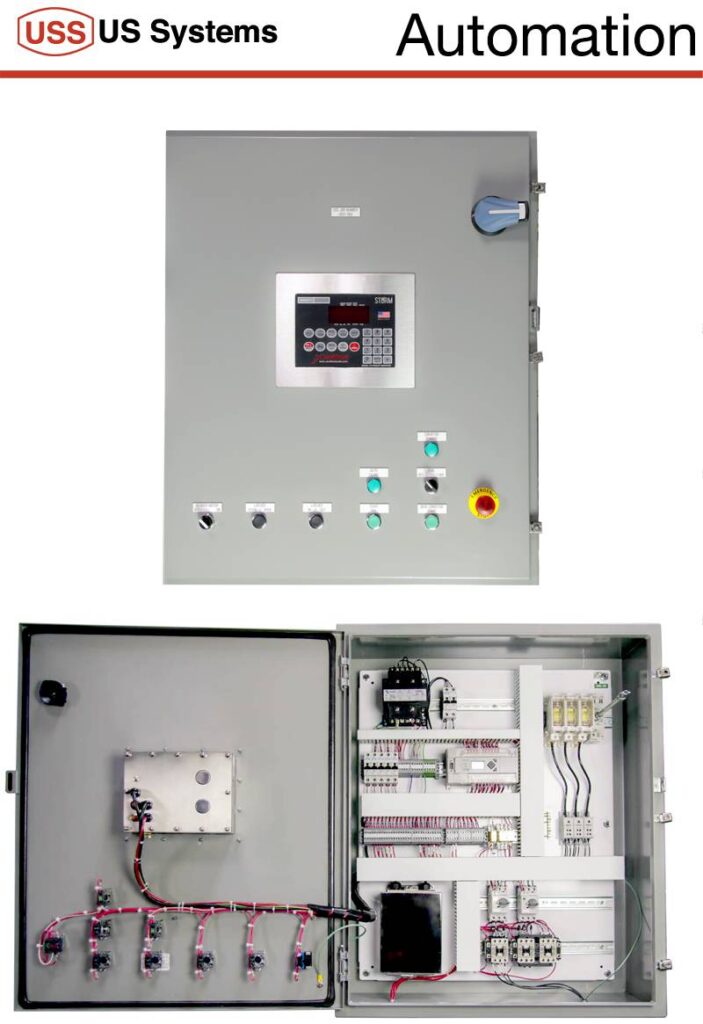
Our systems feature industrial-duty, NEMA-rated control panels that enhance the automation of your processes. These advanced control panels help your system run smoothly with minimal downtime, improving overall efficiency and productivity.
Key Features of Our Control Panels:
- NEMA-Rated Panels: Designed to meet rigorous standards, providing strong protection and reliable, long-lasting performance in harsh industrial environments.
- Disconnect Switch: Allows safe disconnection of electrical power to your system for maintenance and emergency shutdowns without compromising safety.
- Primary Circuit Protection: Protects your system from electrical faults and overloads, minimizing damage and maintaining operational continuity.
- Industrial-Duty Buttons, Selector Switches, and Door Devices: Robust, durable components that offer reliable control and easy operation in demanding industrial settings.
- PLC (Programmable Logic Controller): Provides advanced automation capabilities for precise control over processes and functions. The PLC can be programmed to execute complex tasks efficiently.
- Motor Starters: Ensure smooth starting and stopping of motors, reducing mechanical stress and extending equipment life.
- HMI (Human Machine Interface): Offers an intuitive, user-friendly interface for operators to monitor and control the system. The HMI displays real-time data and allows easy adjustments for optimized performance.
- LED Indicator Lights: Provide visual status updates for quick identification of system conditions, enhancing operational awareness.
- Variable-Speed Controls: Enable precise regulation of motor speeds, optimizing energy consumption and process control.
- Touchscreen: A responsive, interactive display that simplifies system management with easy access to settings, controls, and diagnostic information.
- Remote Networking Capability: Allows remote monitoring and control from any location, enabling timely interventions and adjustments for improved responsiveness and flexibility.
- Data Collection: Supports the gathering and analysis of operational data, providing insights into system performance and helping identify areas for improvement. This supports predictive maintenance and process optimization.
Quality Counts
At US Systems, we understand the demanding environments our customers operate in. Our pneumatic conveying equipment, including pots, boosters, and supporting systems, is engineered to be rugged and reliable.
Robust Construction and Design
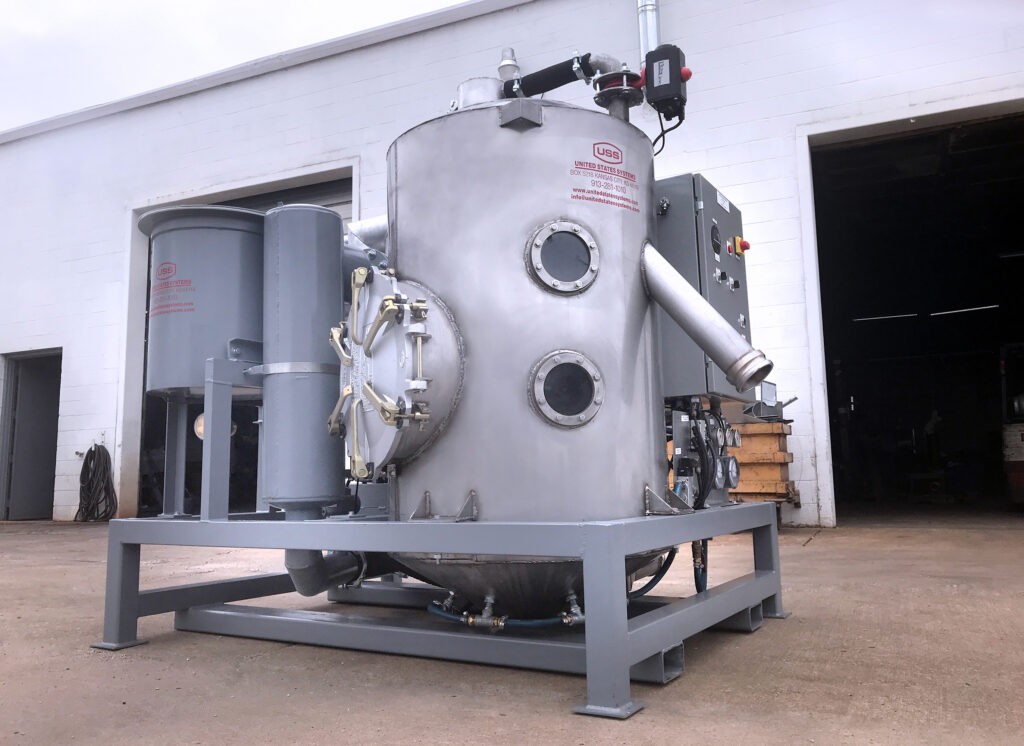
Each US Systems Pot is built with durable materials such as stainless steel, aluminum, or carbon steel, ensuring long-lasting performance even in harsh conditions. This construction provides strength along with resistance to corrosion, wear, and environmental factors.
Visual Inspection and Easy Maintenance
Our pots are equipped with visual inspection sight glasses, allowing operators to monitor material flow and system performance without interrupting operations. User-friendly access and clean-out ports make maintenance and cleaning straightforward, reducing downtime and improving efficiency.
Advanced Control Options
We offer both manual and automatic control options for pneumatic and electrical functions. This flexibility lets customers choose the control method that fits their operational needs. Our control panels can include features such as:
- 12VDC, pneumatic, or 120VAC options for controls, ensuring compatibility with various power systems and operational requirements
- Premium components selected for durability and reliability, designed to withstand rigorous industrial use
Premium Components for Longevity
We use only high-quality components in our systems so they stand the test of time. This commitment to quality means fewer breakdowns and longer intervals between maintenance, providing a dependable solution for your pneumatic conveying needs.
By incorporating these features, US Systems ensures our equipment meets and exceeds the demands of your operations. Whether you are dealing with abrasive materials, high throughput requirements, or challenging environmental conditions, our equipment is designed to deliver reliable, efficient performance.
For more information or to discuss your specific needs, please contact us. Our team is ready to provide the support and solutions you need to optimize your material handling processes.
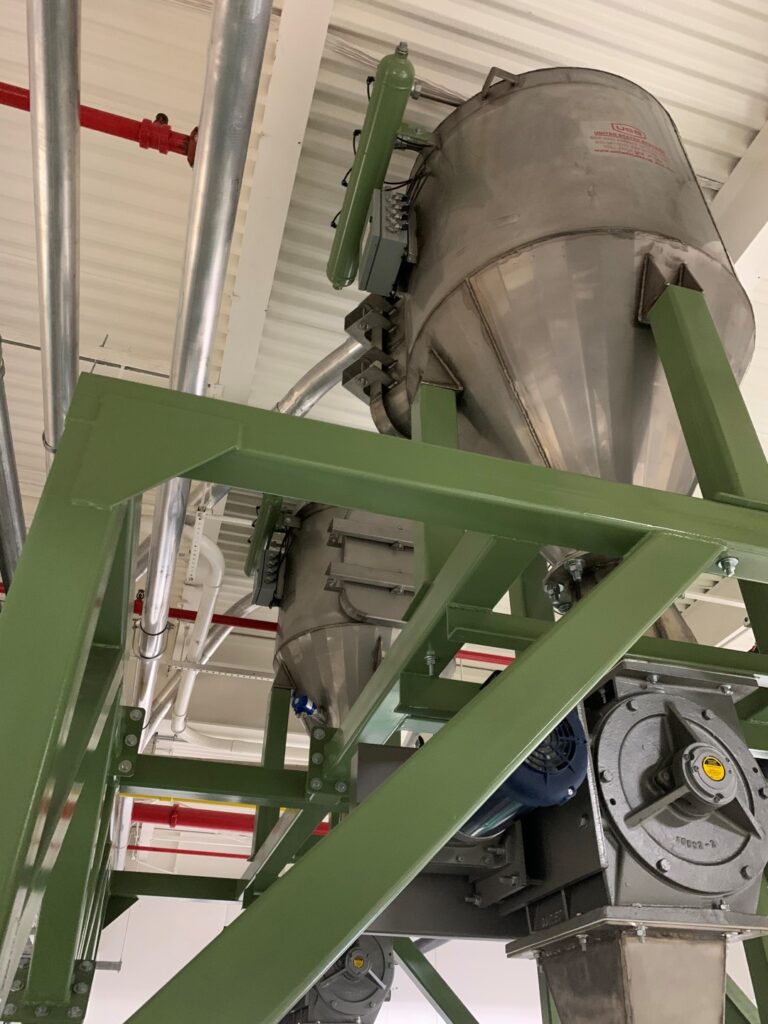
Commissioning and Education
Pneumatic conveying systems provide reliable service, consistent uptime, and significant savings on labor and energy costs, often running at a fraction of the cost of mechanical systems. Our systems can transport materials where others cannot, offering a refined, efficient solution. Unlike competitors who consider their job done once the system is shipped, we provide comprehensive commissioning services. Your system arrives operational, perfectly balanced, and your operators are fully trained to use it efficiently.
Support After Installation
At US Systems, our commitment to you extends beyond installation. We offer a full range of consumables and replacement parts to keep your system running smoothly. With decades of experience, we have even refurbished 30-year-old USS machines and put them back into service. Ordering replacement parts such as filters or fittings is simple. Just call 913-281-1010 and we will ensure you get what you need promptly.
For reliable, efficient, and well-supported pneumatic conveying solutions, US Systems is your trusted partner. Contact us to learn more about our comprehensive services and support.
Pneumatic Conveying Components & Accessories
At US Systems, we provide a comprehensive range of accessories designed to enhance the safety and efficiency of your operations. Our accessories are engineered for seamless integration and optimal performance in your pneumatic conveying systems.
Camlock Fittings: Quick-connect couplings used to connect and disconnect hoses and pipelines securely and efficiently, common in pneumatic conveying systems for their ease of use.
Compression Couplings: Couplings that use compression to join two pipes or tubes, creating a strong, leak-proof seal without welding or soldering.
Blow-Thru Discharge Adapter: Allows materials to be discharged from a conveying system with airflow assistance for smooth, efficient transfer.
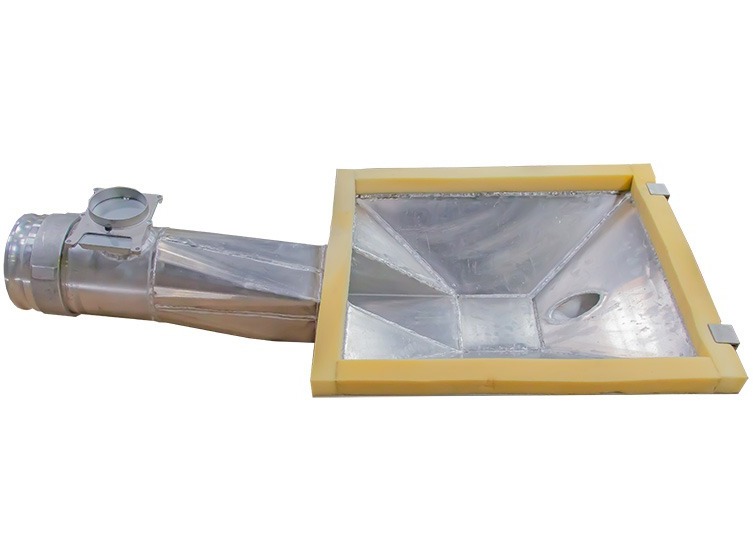
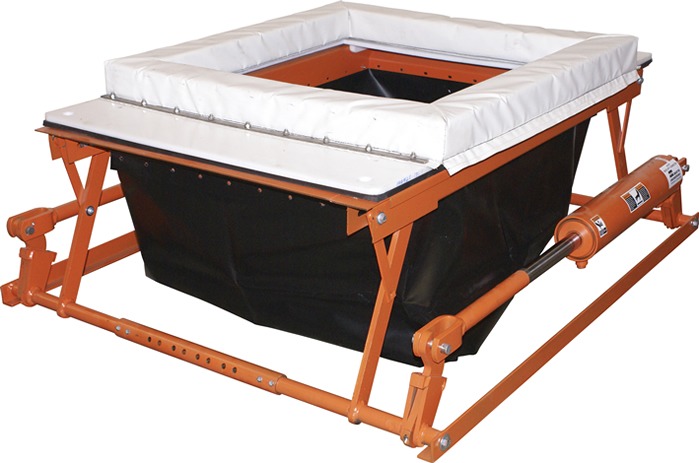
Railcar Hopper Adapter Pan: Connects a railcar’s hopper to a conveying system, facilitating the unloading of bulk materials.
Knife Gate Valves: Valves with a sharp-edged gate that cuts through flowing materials for precise flow control.
Butterfly Valves: Valves that use a rotating disc to regulate material flow through a pipe, known for quick operation and low pressure drop.
Diverter Valves: Valves that redirect the flow of materials from one pipeline to another, used to control routing within a conveying system.
Railcar Boot-Lift: A device that lifts and positions a railcar’s boot, enabling efficient connection to the pneumatic conveying system for unloading.
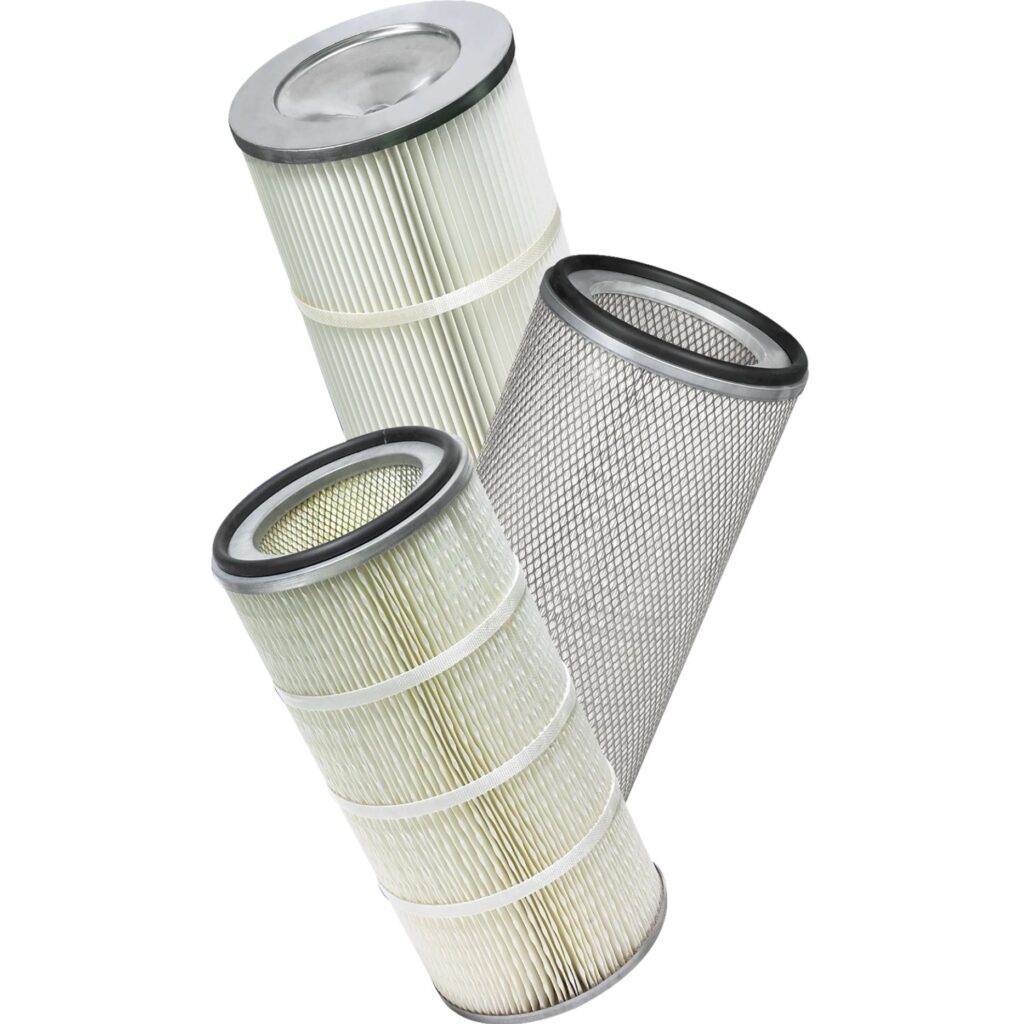
Industrial Filters: Filters that remove contaminants and particulates from air or materials in a conveying system for clean, efficient operation.
Convey Line: The pipeline through which materials are transported, designed to withstand the pressures and abrasiveness of conveyed materials.
Angel Hair Trap: A device that captures and removes fine strands of material, known as angel hair, that can form during conveying, preventing blockages and maintaining system efficiency.
GP Railcar Outlet Adapter: Adapter that connects a general-purpose (GP) railcar outlet to a pneumatic conveying system for secure, efficient material transfer.
Cyclone Separator: A device that uses centrifugal force to separate particulates from an air or gas stream, common in pneumatic conveying to remove dust and debris.
Bins, Hoppers, and Silos: Storage containers for bulk materials, designed to hold and release materials into a pneumatic conveying system as needed.
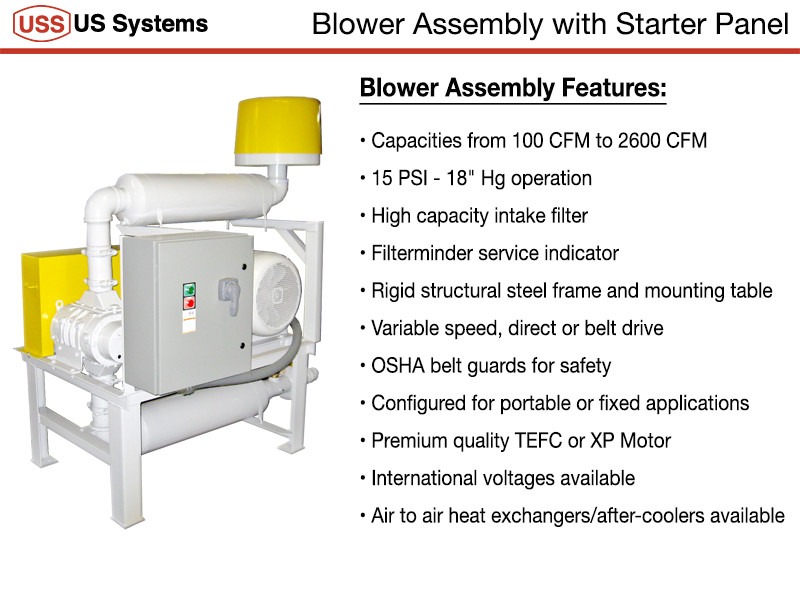
Blower Package: A self-contained unit that includes a blower, motor, and associated components, providing the air flow and pressure required by pneumatic conveying systems.
Bin Vent: A filter system installed on top of storage bins that allows air to escape while retaining stored materials, preventing dust emissions and maintaining air quality.
Aftercooler: A device that cools the air discharged from a blower, reducing its temperature and moisture before it enters the conveying system and preventing material degradation.
Electrical Components: Various electrical parts used to control and monitor the operation of a pneumatic conveying system, including sensors, switches, and control panels.
Lump Breaker: A device used to crush or break down large lumps of material into smaller pieces for consistent material flow.
Shot Box: A component that collects and discharges material samples, enabling quality control and analysis within a pneumatic conveying system.
Bin Vibrator: A device that uses vibrations to promote the flow of materials from storage bins, preventing blockages and ensuring consistent discharge.
Piston Vibrator for Bins and Silos: A type of vibrator that uses piston movement to generate vibrations, aiding material flow from bins and silos.
Rotary Valve Shear Protector: A safety device that protects the rotary valve from shear forces, ensuring reliable operation and longevity.
Rotary Valve: A valve that uses rotating blades to regulate material flow, providing consistent, controlled discharge in a pneumatic conveying system.
Sound Enclosures: Enclosures designed to reduce noise generated by pneumatic conveying equipment, creating a quieter working environment.
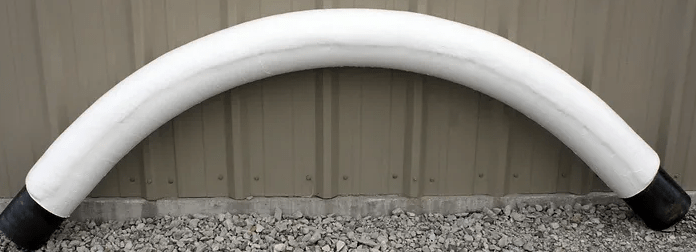
Ceramic-Backed Elbows: Elbows with a ceramic coating, used on pipeline bends to withstand abrasive materials and extend the lifespan of the conveying system.
PD Blowers: Positive displacement blowers that provide the steady air flow essential for maintaining pressure and airflow in pneumatic conveying systems.
PD Blower Oil: Specialized oil used to lubricate and maintain positive displacement blowers for efficient, reliable operation.
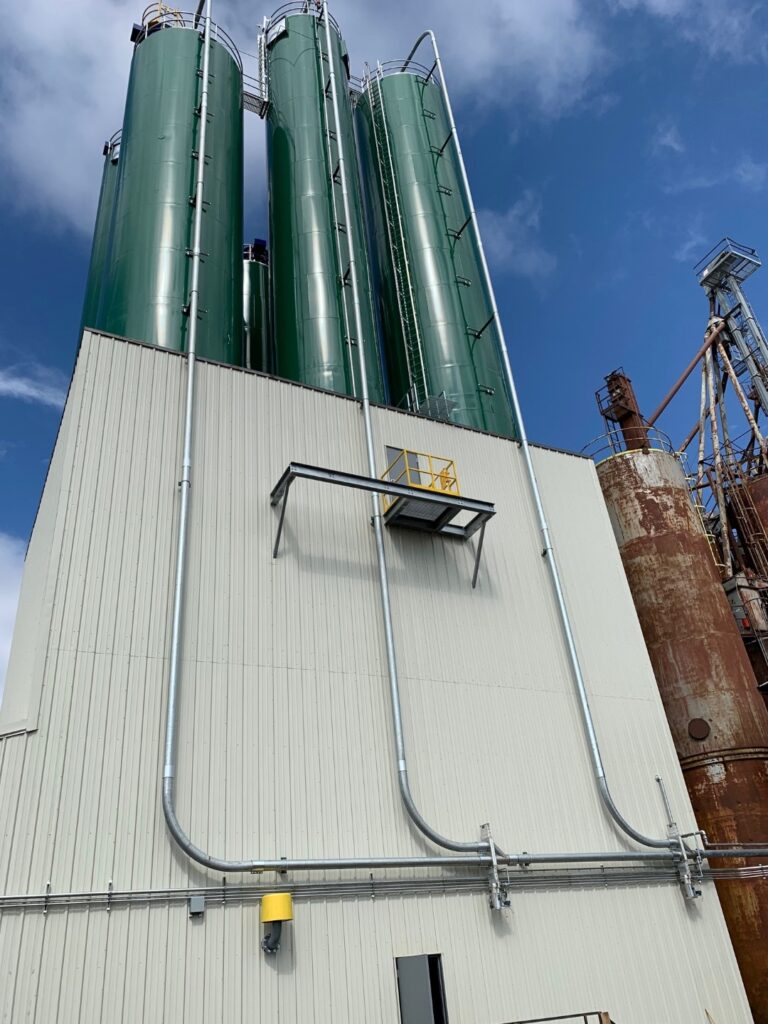
CONVEY LINE ROUTING:
Poor:
- Sharp turns or elbows.
- Useless bends or turns.
- Shut-off or diverter valves in the conveying line.
- Longer line than necessary.
- Diagonal piping. Any deviation of 5 degrees or more from strictly horizontal or vertical will increase air requirement, otherwise surging and plugging will result.
- Any leak in the conveying line will have similar results to No. 5.
- Inadequate venting may cause pressure build-up in the receiving tank, which may cause it to bulge or rupture. Note: never use another fill pipe as venting.
- Fill pipe connection at the bottom of the hopper. Unloading against static pressure of product in the bin reduces unloading rate substantially.
- Horizontal hook-up connection to the hose.
- Reduction in pipe size. If a trailer or portable storage unit has 4" or 5" piping, 4" or 5" piping should be provided the full distance.
Good:
- Always short as possible.
- Keep the piping strictly vertical or horizontal when possible.
- Route the piping with as few bends as possible.
- All pipe bends should have four to five-foot radius turns (sweeps, or 15 times the diameter of the pipe).
- Adequate venting on the receiving bin.
- Adequate dust collector on the receiving bin when necessary.
- Ample ground clearance (4-6 ft) at the hose hook-up to allow a natural bend of the hose.
- Tight and smooth joints.
- Use a 5" or 6" line when a high unloading rate is required, provided adequate CFM is available.

Your partner in process success
CONCEPT – DESIGN – ENGINEERING – FABRICATION – COMMISSIONING
Proudly serving the food, grain, coffee, plastics, mineral, chemical, and pharmaceutical industries
✓ System & Component Design
✓ Engineering
✓ Manufacturing
✓ Industrial Controls
✓ Installation & Commissioning
✓ Parts Support
For Product Inquiries:
Please describe the problem you’re looking to solve – a knowledgeable and experienced engineer is ready to help.